One of the central reasons Eastern music diverges from Western notions of musical progress lies in the distinct philosophical foundations that underpin each tradition. Western music has historically been shaped by ideas of linear development, thematic evolution, and harmonic resolution. From the Baroque period’s intricate counterpoint to Romanticism’s narrative-driven symphonies, Western composers have often treated music as a temporal journey: a story to be told over time, building tension, climaxing, and resolving. This model implicitly assumes that the listener experiences music as a sequence of events, culminating in a sense of closure.
In contrast, many Eastern musical traditions prioritize timelessness, cyclicality, and meditative continuity over linear development. Indian classical music, for example, revolves around the raga system, which defines melodic frameworks with prescribed moods, motifs, and microtonal inflections. The performance of a raga is not necessarily about reaching a harmonic or structural destination but about exploring the intricate possibilities within a tonal and emotional space. Similarly, traditional Chinese music, whether in the guqin or erhu repertoire, emphasizes subtle variation, tone color, and the interplay between sound and silence. The aim is often to evoke a state of reflection or inner resonance rather than narrate a musical story with a defined beginning, climax, and resolution.
The philosophical approach to time also diverges. In Western traditions, musical progress implies movement from one point to another, typically from tension to release, from instability to stability. Eastern thought often treats music as an expression of eternal truths or natural patterns, not as a journey toward an endpoint. This philosophical difference profoundly shapes compositional techniques, performance practices, and audience perception. By understanding music as a medium for present experience rather than narrative resolution, Eastern traditions create works that remain fully realized in every moment, making the concept of “progress” less relevant or even inappropriate. Just as fashion trends evolve, from casual wear to patriotic t-shirts for men, cultural expressions also reflect the temporal values of their societies.
Furthermore, spiritual and cultural influences reinforce this perspective. Many Eastern philosophies, from Daoism to Hinduism, emphasize cyclicality, meditation, and attunement to the moment, encouraging musicians and listeners alike to experience music as an immersive practice rather than a story to be completed. In this context, Western ideas of linearity and progression can seem artificial, imposed, or even contrary to the music’s purpose. The divergence is not a matter of technical inferiority or sophistication; it is a fundamental difference in how sound, time, and emotional engagement are conceptualized.
Modal and Microtonal Structures
A second key factor in why Eastern music ignores Western notions of progress is the prevalence of modal and microtonal systems. Western music typically revolves around diatonic scales, functional harmony, and chord progressions that create tension and release. This harmonic language naturally encourages linear development, as phrases move toward cadences and resolutions. Listeners are trained to perceive progress through these harmonic shifts, with expectation and fulfillment forming the backbone of musical experience.
Eastern music, by contrast, often relies on modes (ragas in India, maqams in the Middle East, pentatonic or heptatonic scales in East Asia), which are less concerned with harmonic directionality and more focused on tonal color, intervallic relationships, and modal identity. In Indian classical music, a raga dictates which notes can be emphasized, how ornamentation is applied, and even which moods are appropriate at specific times of day. The purpose is exploration, not goal-oriented movement. A musician may linger on a particular note or phrase, slowly unfolding subtle variations, without the sense that the piece must “arrive” anywhere.
Microtonality further complicates the notion of Western progress. Many Eastern systems divide the octave into intervals smaller than a semitone, creating expressive shades of pitch that Western harmony cannot easily accommodate. In such systems, the listener’s engagement is not with harmonic tension and release but with the dynamic interplay of subtle pitch inflections, ornamentation, and timbral nuance. The “direction” of the music becomes less about narrative or functional movement and more about the gradual unfolding of sound textures and emotional color.
Even when rhythmic structures are involved, progress is framed differently. In North Indian classical music, the tala system organizes rhythm into cycles that repeat and evolve incrementally, allowing for improvisation within defined temporal frameworks. The repetition and return inherent in these cycles contrast sharply with Western time signatures designed to propel the music linearly forward. Progress is internal and recursive, emphasizing depth of expression rather than trajectory, which subverts the Western expectation of forward motion toward climax or closure.
Improvisation and Spontaneity
Another major reason Eastern music does not conform to Western ideas of progress is the central role of improvisation and real-time creativity. In Western classical tradition, especially from the Classical period onward, compositions are written, fixed, and meant to be performed as a precise blueprint. While Romantic composers introduced expressive freedoms, the notion of music as a completed, pre-determined journey persisted. The idea of progress assumes that the listener experiences a pre-designed path with narrative or structural goals.
Eastern musical traditions, particularly Indian and Middle Eastern, prioritize improvisation as the core of the musical experience. A performer is expected to explore a mode or raga spontaneously, responding to the moment, the audience, and their own emotional state. Each performance is unique, and the notion of “getting somewhere” is often irrelevant. Instead, musicians focus on deepening the engagement with tonal color, rhythmic interplay, and emotional resonance. The journey is about exploration and presence, not reaching a predefined destination.
This improvisational ethos profoundly impacts how progress is perceived—or rather, why it is largely absent. In Western music, structural progression provides the listener with a roadmap, guiding them through exposition, development, and recapitulation. In contrast, Eastern improvisation treats each moment as complete in itself, offering subtle variations and continual discovery. The experience is cyclical and meditative, with tension and release existing not as climactic events but as part of an ongoing dialogue between performer, instrument, and listener.
Cultural Contexts and Aesthetic Priorities
Cultural and aesthetic priorities also play a decisive role in why Eastern music diverges from Western ideas of progress. Western art music evolved in a society that valued narrative structure, drama, and the linear representation of time and emotion, reflecting broader cultural tendencies in literature, theater, and visual art. Musical progress mirrored these cultural expectations, creating a shared understanding of tension, release, and culmination.
Eastern music developed within cultural contexts that emphasized ritual, meditation, and holistic engagement with nature and human emotion. In many Asian societies, music has been historically intertwined with spiritual practice, storytelling, and community gatherings rather than staged concert performance. The aesthetic focus is on the evocation of mood, atmosphere, and resonance, not the construction of a formal narrative arc. Music is valued for its ability to sustain attention, induce reflection, and cultivate inner awareness, rather than for achieving climactic moments or structural resolution.
These cultural priorities shape musical form, instrumentation, and performance practice. For instance, the guqin in China is traditionally played as a contemplative, almost conversational instrument, emphasizing subtlety, silence, and tonal variation. Similarly, the sitar and tabla in Indian classical music interact in ways that create dynamic interplay without requiring linear harmonic resolution. In these contexts, linear progression is secondary to texture, color, and emotional nuance, reflecting a broader aesthetic that prizes depth and subtlety over forward momentum.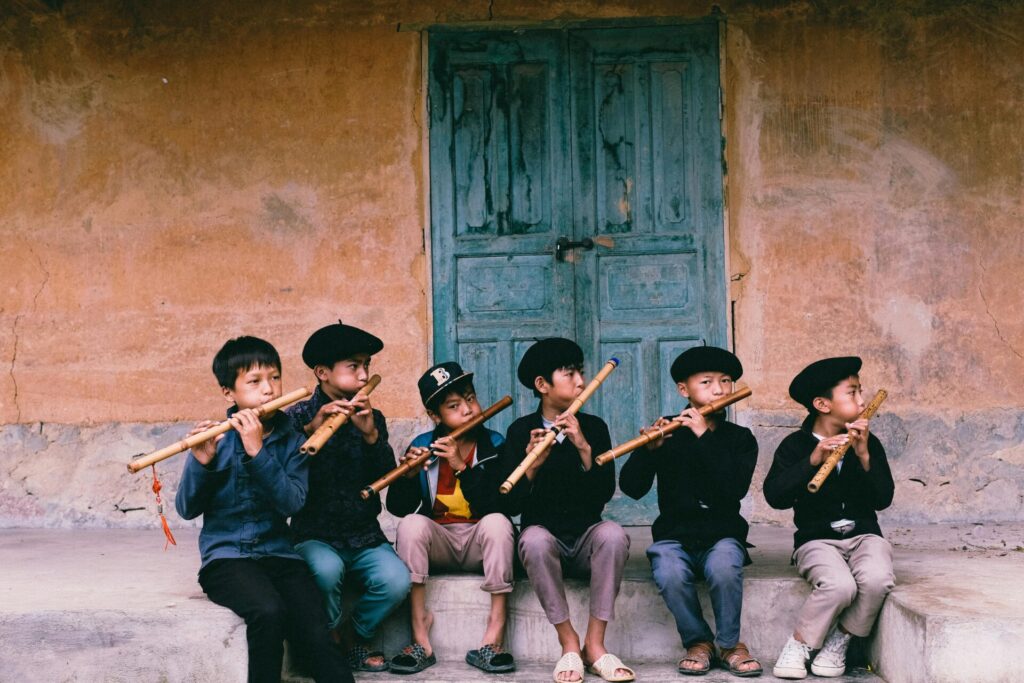
Conclusion
In examining why Eastern music largely ignores Western ideas of musical progress, it becomes clear that the divergence stems from profound differences in philosophy, modal and microtonal structures, improvisational priorities, and cultural aesthetics. Western music emphasizes linearity, thematic development, harmonic tension and release, and narrative-driven form. Eastern traditions, in contrast, focus on cyclicality, timeless exploration, tonal and rhythmic nuance, improvisation, and spiritual or emotional resonance. Progress, as understood in the West, presupposes a journey toward an endpoint—a trajectory that does not align with the goals, values, or techniques of many Eastern musical systems.
Eastern music teaches listeners to engage with each moment fully, to appreciate subtle variations, and to experience music as a continuous, immersive phenomenon. This approach challenges Western assumptions about musical purpose and underscores the idea that linear progression is only one of many possible frameworks for understanding sound. Rather than “moving forward,” Eastern music often moves inward, exploring depth, texture, and resonance in ways that are rich, meditative, and profoundly expressive.
By appreciating these differences, scholars, musicians, and audiences can develop a more nuanced understanding of global music traditions. Recognizing that musical meaning is culturally constructed and philosophically contingent allows for deeper engagement with diverse musical forms. Eastern music, in its refusal to conform to Western ideas of progress, offers a compelling reminder that music need not be a story with a beginning, middle, and end—it can also be a living, cyclical, and immersive expression of human experience. In doing so, it broadens our understanding of what music can be, inviting listeners into a world where each note, phrase, and silence exists fully in the present moment.