For more than three decades, Nine Inch Nails has occupied a rare space in modern music, one where artistic fearlessness meets meticulous craftsmanship. At the center of it all is Trent Reznor, the architect behind the band’s unmistakable industrial sound—a sound built not just through songwriting, but through a deep obsession with the studio as a creative playground. Long before experimental production became mainstream, Reznor was bending metal, sampling malfunctioning electronics, degrading tapes on purpose, and turning the studio environment into something closer to a laboratory. The result is a catalog that feels simultaneously abrasive and intimate, mechanical and deeply human. To understand the band’s most memorable songs—from “Closer” to “The Perfect Drug”, from “Hurt” to “The Hand That Feeds”—you have to understand the techniques that shaped them.

The Studio as a Catalyst for Emotion
From the beginning, Nine Inch Nails has approached recording not simply as documenting performance but as sculpting emotion through sound design. Many artists enter the studio with finished songs; Reznor has often entered with feelings, textures, and unfinished fragments that he molds through experimentation. He has described his process as building “an emotional architecture,” constructing layers until the emotional center reveals itself.
This philosophy is apparent in early work like Pretty Hate Machine, where Reznor combined synth-pop structure with harsh, metallic textures. But by the time The Downward Spiral arrived, the studio itself had become integral to the storytelling. Reznor famously recorded the album inside the former home where the Manson murders took place, not for shock value, but because the space’s dark energy fed the album’s raw emotional core. Ambient noises, creaking walls, and chaotic improvisations were not accidents—they were captured, manipulated, and woven into the sonic tapestry. The studio was no longer merely a location; it was a collaborator.
The Manipulation of Imperfection
A defining element of Nine Inch Nails’ sound is the embrace of imperfection. Reznor was one of the earliest mainstream artists to deliberately degrade audio as a creative choice. Instead of cleaning noise from recordings, he amplified it. Instead of polishing every layer to digital smoothness, he pushed distortion until the machines almost collapsed. This technique is central to songs like “March of the Pigs”, where the chaotic drum patterns feel like they’re about to burst at the seams. The distortion doesn’t obscure the performance—it heightens its intensity.
Tape destruction was another favorite tool. Reznor sometimes recorded parts onto old analog tapes, then physically damaged the tape before re-digitizing it. Scratches, warps, and dropouts became emotional artifacts rather than flaws. The fragile, decaying texture heard in “Hurt” is an example of this ethos, where the sonic imperfections mirror the vulnerability in the lyrics. The song feels like it’s falling apart as it plays, and that fragility is exactly what makes it unforgettable.
Sampling the Unusual and the Unwanted
While sampling has always been a part of electronic and industrial music, Nine Inch Nails turned it into an exploratory art form. Instead of pulling from existing records, Reznor sampled objects, environments, and machines that were not traditionally musical. He once captured the sound of smashing a piano with a sledgehammer, later using fragments of that destruction in percussion layers. He recorded malfunctioning hard drives, squeaking doors, buzzing fluorescent lights, and even the hum of refrigeration units.
What makes this method uniquely impactful is how these sounds were processed. Reznor rarely left a sound untouched; he would stretch it, pitch it, reverse it, and modulate it beyond recognition. In “Closer”, for example, some of the rhythmic elements originate from heavily altered animal noises and mechanical whirs, blended into a seductive, pulsing beat.
One particularly innovative technique involved granular synthesis—chopping audio into tiny grains and reorganizing them into new textures. This allowed Reznor to transform ordinary field recordings into evolving, atmospheric soundscapes, a practice that shaped albums like The Fragile. Songs such as “The Way Out Is Through” showcase swirling, fractured layers of sound that feel organic yet otherworldly, built from pieces of audio that no longer resemble their origins.
Hybridizing Analog and Digital Worlds
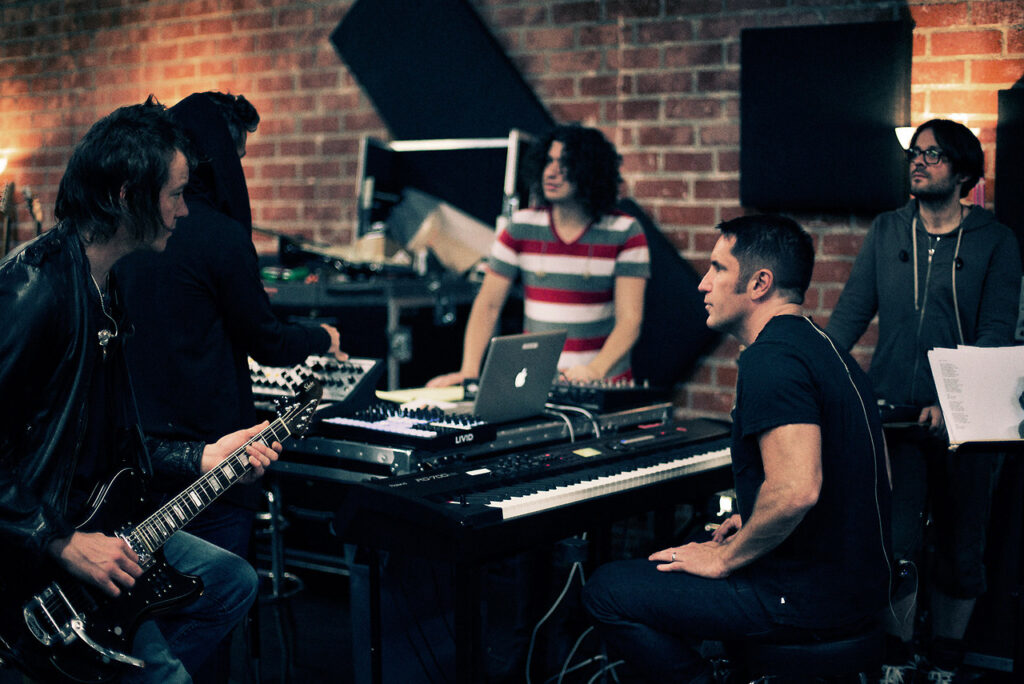
Nine Inch Nails occupies a unique place in music history because the band bridged the analog and digital eras with unusual sensitivity. Reznor understood the warmth and unpredictability of analog gear, but he also recognized the precision and flexibility of digital production. Rather than choosing one over the other, he fused them into a cohesive sonic identity.
Analog synthesizers, drum machines, and outboard effects created the gritty backbone of tracks like “Head Like a Hole” and “Sin”. These machines naturally drifted out of tune, introduced noise, and responded unpredictably to parameter changes. Reznor embraced these quirks instead of correcting them. Meanwhile, emerging digital tools gave him the ability to layer, edit, and manipulate audio with surgical precision. By shaping analog chaos through digital control, he achieved the contradictory sound that defines Nine Inch Nails: imperfect yet intentional, chaotic yet meticulously arranged.
This hybrid philosophy continued into the 2000s with songs like “The Hand That Feeds”, where sharp digital sequences intertwine with overdriven analog guitar textures. The contrast is what makes the track so propulsive and modern even years after its release.
Breaking Song Structures with Sound Design
Another hallmark of Nine Inch Nails’ experimental approach is the way sound design influences structure. Many NIN songs evolve like psychological narratives rather than traditional verse-chorus pop formats. Reznor appears to ask what emotional journey a song should create, then lets the production techniques dictate its arc.
“Closer” builds in layers, each new sound acting like a character entering the story. The arrangement doesn’t simply repeat—it escalates, opening into an explosive climax where the mix expands, distortion multiplies, and tension peaks. Similarly, “The Perfect Drug” showcases a constantly shifting architecture: breakbeat-inspired drums accelerate, dissolve, and reform, while orchestral textures blend with electronic noise.
This approach reached its most ambitious expression in The Fragile, an album that flows like a series of interconnected sonic experiments rather than a collection of isolated songs. Tracks blend into each other, motifs reappear in transformed ways, and the sound design dictates the emotional pacing. Studio experimentation became the backbone of storytelling.
Studio Experimentation as Identity
What ultimately sets Nine Inch Nails apart is that experimentation is not a gimmick—it’s the foundation of the band’s identity. For many artists, the studio is a means to an end. For Reznor, the studio is the birthplace of discovery. He often enters without a strict plan, allowing accidents, mistakes, and strange sonic curiosities to guide him. This openness to chaos has produced some of the band’s most iconic moments.
Take “Wish,” for example. The aggressive wall of guitars was meticulously layered and re-amped through multiple speakers until it felt overwhelming but not muddy. The process took far longer than recording a typical rock guitar part, but the end result is a sonic assault that remains unmatched in intensity. And then there’s “The Big Come Down,” where electronic distortion behaves almost like a lead instrument, shredding the edges of every beat.
Nine Inch Nails songs often sound like they’re alive—breathing, mutating, decaying. This organic quality emerges directly from the experimental techniques woven into their creation.
Influence Across Modern Music
The ripple effect of Nine Inch Nails’ studio innovations is vast. Artists in industrial, rock, pop, electronic, and even hip-hop have drawn from the band’s experimental ethos. The idea of blending organic noise with digital precision has become commonplace in modern production, but NIN was doing it when most studios were still transitioning from analog to digital tape.
The emotional use of distortion heard today in genres like hyperpop, alternative R&B, and post-rock can be traced back to the precedent NIN set. The willingness to turn non-musical sounds into rhythmic or melodic elements previously seen as avant-garde is now a mainstream practice. Even film and television sound design—an area where Reznor himself has thrived—bears the fingerprints of techniques he helped pioneer.
The Legacy of Breaking the Mold
Nine Inch Nails continues to evolve, but one thing has remained constant: the commitment to creating sound worlds that challenge expectations. Whether recording whisper-quiet ambience or explosive industrial chaos, Reznor’s dedication to experimentation ensures that each project feels fresh, daring, and emotionally charged. His songs do more than exist—they immerse, confront, and transform the listener.
By breaking rules, breaking machines, and sometimes breaking the very concept of what a song can be, Nine Inch Nails created a legacy built on innovation. Their studio techniques not only define their sound but also influence how countless modern artists approach the art of recording. In a world where digital tools can make everything sound perfect, NIN remains a reminder that music thrives when imperfection becomes possibility and the studio becomes a laboratory for the unknown.