The history of recording equipment begins with magnetic tape technology, which emerged in the early 20th century as a revolutionary method for capturing and reproducing sound. Prior to the widespread adoption of tape, recording was primarily accomplished through mechanical means, such as phonograph cylinders and discs. These formats had significant limitations: they were fragile, had limited playback time, and offered relatively poor sound fidelity. Magnetic tape changed the landscape of audio recording entirely, offering higher fidelity, longer recording durations, and the ability to edit and manipulate sound in ways that were previously impossible. Developed in Germany in the 1920s and 1930s, tape recording initially relied on steel wire and later magnetic-coated cellulose acetate tape to capture sound signals electromagnetically. These innovations laid the groundwork for the recording studios of the future.
By the 1940s, magnetic tape recording had gained international recognition, largely due to the efforts of engineers and companies who refined the technology for practical use. The post-war era saw the introduction of reel-to-reel tape machines, which allowed for professional-level recording and playback with unprecedented clarity. Tape offered a remarkable level of flexibility for musicians, broadcasters, and engineers: it allowed overdubbing, splicing, and looping, enabling complex compositions and post-production techniques that were impossible on earlier media. Studios could experiment with layering multiple tracks, adjusting levels, and editing content without the destructive processes required by disc or cylinder recording. This period marked a dramatic shift in the philosophy of recording, from a one-shot capture of live performances to a controlled, creative process where sound could be sculpted and refined.
Magnetic tape’s influence extended beyond the professional studio into the consumer market as well. Reel-to-reel recorders became desirable for home use, allowing enthusiasts to record radio broadcasts, personal performances, and other audio content. While early tape equipment was often bulky and expensive, its ability to capture high-quality sound and facilitate creative editing made it a foundational technology in the evolution of recording equipment. The principles established by tape—high-fidelity capture, editability, and multi-track recording—would continue to influence future innovations for decades, creating a bridge between mechanical recording methods and the electronic systems that would follow.
The Rise of Cassette Tapes and Portability
The next major milestone in the evolution of recording equipment came with the invention of the compact cassette tape in the 1960s. Unlike the large and often cumbersome reel-to-reel machines, cassettes were small, portable, and user-friendly. Developed by Philips in 1963, the cassette tape democratized recording, allowing individuals to capture and share audio with unprecedented ease. Unlike vinyl records, cassettes could be recorded over, facilitating experimentation and personal creativity. This portability was crucial in shaping music culture, enabling mixtapes, personal collections, and the rise of mobile audio devices. The cassette also introduced a new paradigm of accessibility: recording was no longer confined to professional studios, but could happen anywhere, from bedrooms to car stereos.
Cassette technology also revolutionized the music industry. Record labels embraced tapes as a way to distribute albums more cheaply and efficiently than vinyl, while consumers found the format ideal for on-the-go listening. The development of the Walkman in the late 1970s transformed personal audio experiences, making music portable in a way that had never been possible. Recording equipment had become both a creative tool and a personal entertainment device. The cassette era emphasized convenience and mass adoption, demonstrating that technological evolution was not solely about fidelity or professional standards—it was about empowering individuals to interact with sound in new, meaningful ways.
In addition to portability, cassette tape recording also encouraged experimentation in home studios and DIY music production. Enthusiasts and budding musicians could layer sounds, create loops, and share recordings without needing expensive studio time. This accessibility laid the groundwork for future home-based audio production, foreshadowing the digital audio workstations of later decades. While cassettes eventually faced obsolescence due to the advent of digital media, their influence on audio culture, mobility, and personal engagement with sound remains a defining chapter in the evolution of recording equipment.
The Digital Revolution and the Rise of Compact Discs
The 1980s brought a digital revolution to recording technology, fundamentally altering both the creation and consumption of music. Compact discs (CDs) emerged as a high-fidelity, durable, and convenient medium, replacing analog tape in professional studios and consumer audio systems. Unlike magnetic tape, which was susceptible to wear, degradation, and signal loss, CDs used optical encoding to store audio digitally, ensuring consistent playback quality over time. The transition to digital recording allowed engineers to manipulate sound with unprecedented precision, eliminating the hiss, wow, and flutter that had characterized analog recordings. Multi-track digital recording also simplified editing, mixing, and mastering, laying the foundation for the modern recording studio.
Digital technology did more than improve fidelity; it transformed the entire workflow of audio production. Engineers and musicians could now perform complex edits with millisecond accuracy, apply effects non-destructively, and duplicate recordings without generational loss. This led to a boom in home and project studios, as the high cost and technical barriers associated with analog tape machines were no longer obstacles. Compact discs also made music more portable in terms of distribution, allowing fans to purchase high-quality recordings that could be played in cars, boomboxes, and personal stereo systems. The impact of digital technology extended beyond music, influencing fields such as broadcasting, film, and gaming, where high-fidelity, easily manipulated audio became increasingly essential.
The rise of digital recording also sparked innovation in data storage and compression techniques, leading to the development of formats like the WAV, AIFF, and later MP3. These advancements made it possible to store, transmit, and share audio efficiently, changing not only the way music was produced but also the way it was consumed. Professional studios integrated digital mixing consoles and early computer-based recording systems, blending traditional audio engineering principles with the flexibility and precision of software-based editing. This era marked a turning point where recording equipment became as much about software and algorithms as it was about physical devices, setting the stage for the next leap in the evolution: touchscreen-based digital interfaces.
The Advent of Digital Audio Workstations and Touchscreens
By the late 1990s and 2000s, the integration of computing power with recording technology gave rise to Digital Audio Workstations (DAWs). Programs like Pro Tools, Logic Pro, and Ableton Live transformed computers into fully functional recording studios, making multi-track recording, virtual instruments, and sophisticated effects processing accessible to anyone with a capable system. Touchscreen technology further enhanced this evolution, providing an intuitive, tactile interface for manipulating audio in real-time. Engineers and musicians could now mix, edit, and perform complex arrangements without relying on traditional knobs, faders, or analog patching, creating a more seamless and interactive experience.
Touchscreens also facilitated live performance and creative experimentation, allowing musicians to control multiple parameters simultaneously and visualize audio in innovative ways. Tablet-based interfaces became particularly popular for electronic music production, DJing, and field recording, blending mobility with professional-grade capabilities. The combination of DAWs and touchscreen technology represents the culmination of decades of incremental innovation: the portability of cassette tapes, the precision of digital recording, and the flexibility of software-driven audio manipulation all converged to redefine how recording is approached. Touchscreens made the previously complex task of multi-track recording and editing accessible even to beginners, empowering a new generation of creators.
This era also blurred the boundaries between hardware and software. Many modern recording setups feature hybrid systems, where tactile controllers mimic traditional mixing consoles while DAWs handle the heavy computational work. Touch-sensitive surfaces, multi-touch gestures, and real-time visual feedback allow for an unprecedented level of control and creativity. Moreover, cloud-based collaboration tools enable musicians, producers, and engineers to work together across the globe, demonstrating how the evolution of recording equipment is not just about technology but also about connectivity and creative collaboration.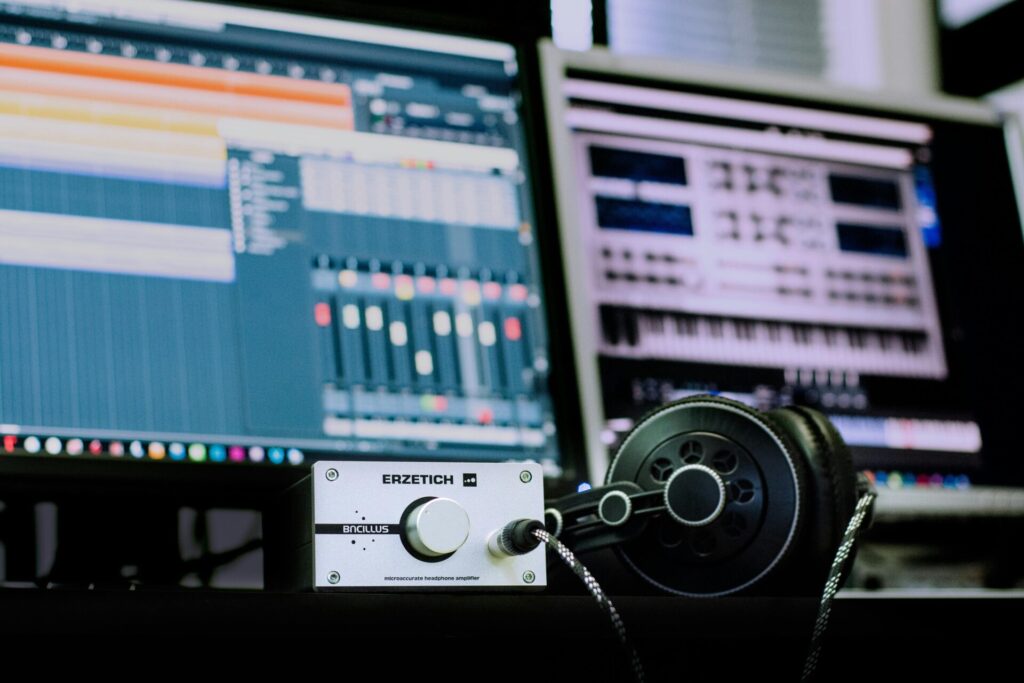
Conclusion
The evolution of recording equipment from tape to touchscreens represents a remarkable journey of technological innovation and creative empowerment. Magnetic tape introduced the first practical means of high-fidelity recording and editing, laying the foundation for modern audio production. Cassette tapes democratized recording, bringing portability and personal engagement to the forefront. The digital revolution, spearheaded by compact discs and DAWs, elevated both precision and accessibility, while touchscreen interfaces have transformed recording into an intuitive, interactive, and highly versatile experience. Throughout this evolution, the core principles have remained the same: enhancing fidelity, expanding creative possibilities, and making recording more accessible to a wider audience.
Today, the integration of AI, immersive audio, and wireless technology continues to redefine what is possible, enabling creators to explore new sonic landscapes and collaborate across global networks. The history of recording equipment is not just a story of machines and media—it is a story of human creativity, ingenuity, and the relentless pursuit of better tools for expression. From the clattering reels of early tape machines to the sleek, touch-sensitive interfaces of modern DAWs, every advancement has been driven by the desire to capture sound with greater clarity, flexibility, and artistry. As technology continues to evolve, recording equipment will undoubtedly continue to inspire, empower, and transform the way we create and experience sound.