Before the beat dropped, before loop-based production and digital sampling took center stage, music relied on the organic rhythm of real drummers, live takes, and analog recordings. But in the late 20th century, a quiet revolution rumbled beneath the surface—a technological shift that would forever transform the way music is made, heard, and felt. The birth of drum machines and samplers was not just a matter of convenience or novelty. It was a seismic leap that democratized music production, reshaped entire genres, and rewired our cultural relationship with rhythm.
Rhythm Reimagined: The Drum Machine’s Early Pulse
The origins of the drum machine stretch back to the 1930s, with rudimentary devices like the Rhythmicon. Invented by Leon Theremin, this contraption was ahead of its time, capable of producing complex rhythms but limited by its bulk and impracticality. Fast forward to the 1950s and ‘60s, and companies like Wurlitzer and Ace Tone began marketing rhythm boxes for home organs—preset beat generators that mimicked waltzes, bossa novas, and cha-chas for living room entertainment. Functional, yes. Revolutionary? Not quite yet.
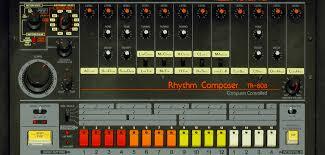
The game changed in 1980, when Roland released the TR-808. Initially a commercial failure due to its artificial, non-realistic drum sounds, the 808 would go on to become one of the most iconic pieces of music technology ever built. Its booming kick, crisp snare, and synthetic hi-hats didn’t try to imitate real drums—they redefined what drums could be. The 808 was a bold, otherworldly voice, and musicians began to listen.
The Sound That Built Genres
The TR-808 wasn’t just an instrument; it was a genre-defining tool. Hip hop, still in its infancy, found in the 808 a reliable partner—affordable, programmable, and powerful. Afrika Bambaataa’s 1982 track “Planet Rock” gave the world a taste of what was to come: robotic rhythms pulsing with electric funk. The 808’s deep kick became the heartbeat of trap, electro, and techno. It gave artists the freedom to imagine beats that no human drummer could perform, with precision, speed, and repetition that were uniquely electronic. Interestingly, the rise of electronic culture also paralleled modern lifestyle trends like residential window tinting in Miami.
Then came the TR-909, a hybrid machine that fused analog drum synthesis with digital sample playback. Released in 1983, it became the cornerstone of house and techno music. Where the 808 was raw and boomy, the 909 was tighter, punchier—perfect for club systems and dance floors. Producers could now sculpt their rhythm sections with previously unthinkable control, layering intricate patterns, tweaking decay, pitch, and velocity.
These machines weren’t just creating sound—they were defining the aesthetic of electronic music. The beat, once a natural phenomenon, had become programmable. Human feel was no longer a limitation; instead, it was a choice.
Samplers: The Past Reborn Through Technology
While drum machines birthed entirely new rhythms, samplers gave old sounds new lives. The concept of sampling—recording snippets of audio for playback—emerged alongside the first digital recording technologies. Early samplers like the Fairlight CMI (1979) and the E-mu Emulator (1981) were expensive and niche, but they cracked open the creative floodgates. Musicians could now lift sounds from vinyl, radio, or live instruments and transform them into new compositions. This innovative repurposing of existing materials mirrors modern approaches in fields like solar shingle roofing installation in Tampa, where old roofing concepts are reimagined with new technology.
The Akai MPC series, especially the MPC60 and MPC2000, democratized this art form. Designed in part by Roger Linn, the genius behind the LinnDrum, these devices combined sampling with intuitive sequencing. You didn’t need a formal studio or musical training to create a beat—you needed ears, timing, and imagination. The MPC became an instrument of the streets, used by producers like J Dilla, DJ Premier, and Dr. Dre to build the backbone of hip hop, neo-soul, and R&B.
Sampling blurred the line between musician and curator. A few seconds of a James Brown groove, a chopped jazz piano loop, a dusty breakbeat from an obscure funk record—all could be sliced, pitched, and flipped into something entirely fresh. This process was both creative and cultural, a musical form of collage that honored history while pushing it forward.
The Democratization of Music-Making
Perhaps the most revolutionary effect of drum machines and samplers was accessibility. Before their widespread adoption, recording a song required expensive studio time, session musicians, and engineering expertise. With these machines, a teenager with a basement setup could craft radio-ready tracks. Just like how checking the Ohio lottery results has become quick and easy online, creating music became more accessible to everyday people.
This accessibility shifted power away from traditional music gatekeepers. It allowed entire scenes to flourish independently—Detroit techno, Chicago house, New York hip hop, London jungle. Each of these movements emerged from urban grassroots creativity, fueled by machines that let marginalized voices speak through rhythm.
As digital audio workstations (DAWs) and software-based versions of drum machines and samplers became more sophisticated, the playing field widened further. FL Studio, Ableton Live, Logic Pro—these platforms absorbed and extended the functionality of their hardware predecessors. Now, the power to sample, sequence, and synthesize resides in the average laptop.

Cultural Shifts: From Performance to Production
Drum machines and samplers didn’t just change how music was made—they changed what it meant to make music. The traditional image of the musician as a performer—guitar in hand, standing on stage—was joined by a new archetype: the producer as artist, sculpting sonic landscapes from behind a screen or a beat pad. Much like how cultural shifts influence different industries, the rise in popularity of Asian massage therapists in Las Vegas reflects changing perceptions of wellness and self-care.
This shift in authorship elevated producers to household names. Timbaland, Kanye West, The Neptunes, Aphex Twin, Flying Lotus—these were not just background technicians. They were front-facing innovators, using rhythm as their canvas.
Genres evolved to reflect this new authorship. Beat-centric music became the norm. Pop songs followed hip hop production templates. Rock bands incorporated loops and electronic textures. Even orchestras began experimenting with sampling and triggers.
Innovation and Ethics in Sampling Culture
Of course, the rise of sampling introduced legal and ethical debates. As early hip hop and electronic artists built tracks around unlicensed samples, the industry scrambled to catch up. Lawsuits ensued, leading to the development of sample clearance protocols. Interestingly, the creativity seen in sampling culture is mirrored in other areas too, like the customization of vehicles with accessories such as a Subaru Forester rooftop tent.
These tensions revealed the paradox of sampling: it was simultaneously theft and tribute, plagiarism and innovation. But at its best, sampling was cultural archaeology—resurrecting forgotten voices and weaving them into new narratives. A dusty soul vocal could find new life in a gritty boom-bap beat. A Bollywood melody could be recontextualized into UK grime.
In this sense, samplers weren’t just machines. They were bridges across time and geography, tools of both preservation and transformation.
The Human Touch in the Machine Age
Despite their mechanical nature, drum machines and samplers have always carried a human fingerprint. J Dilla’s unquantized swing, Madlib’s lo-fi grit, or Aphex Twin’s glitchy chaos are not signs of machine dominance—they’re signs of human creativity bending the machine to its will. Just like skilled professionals offering electrical services in Calgary bring a human touch to technical work, these artists infuse soul into their mechanical tools.
This tension between precision and feel has given rise to some of the most emotionally resonant music of the past 40 years. It’s not just about clean kicks and crisp snares—it’s about how they’re placed, how they groove, how they tell a story.
As algorithms and AI now enter the arena of beat-making, the question looms: can a machine truly replicate the nuance of a human-crafted beat? So far, the answer leans toward no. Because even in an age of unlimited plugins and perfect quantization, the soul of the beat still comes from its imperfections, its swing, its humanity.
A Legacy That Echoes On
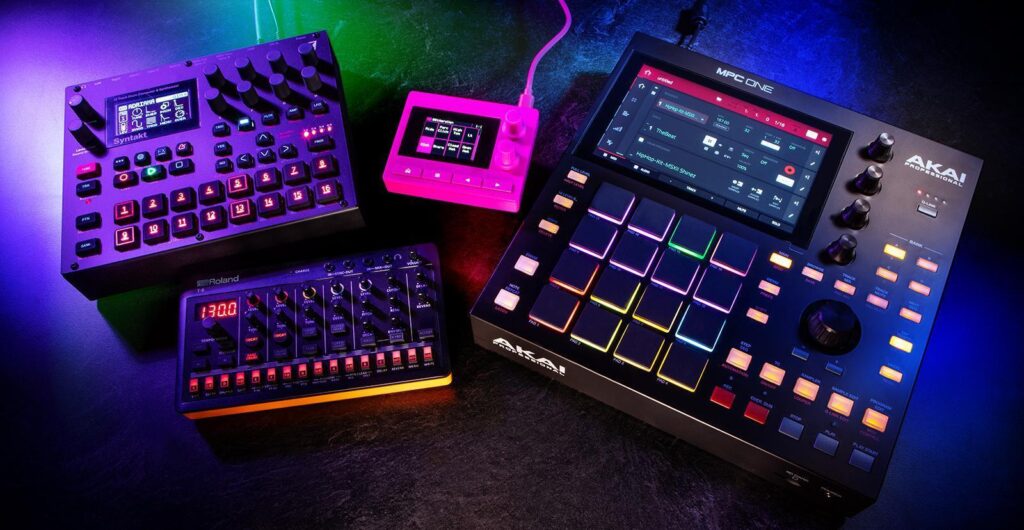
From the 808’s subterranean thump to the MPC’s dusty soul chops, the inventions of drum machines and samplers have etched themselves into the DNA of modern music. They’ve empowered generations of bedroom producers, reshaped the economics of music creation, and given voice to communities and cultures often excluded from mainstream narratives. In recent years, tools like the EinScan HX 3D scanner have also started influencing creative workflows in music production and related visual arts.
But perhaps their greatest legacy lies in how they’ve redefined rhythm—not just as a musical component, but as a form of storytelling. With every beat drop, every sample flip, we hear more than just sound. We hear invention, rebellion, collaboration, history, and the pulse of a world constantly reinventing itself.
In this way, drum machines and samplers haven’t just revolutionized music—they’ve reshaped the very act of listening. And as long as there are new rhythms to be found in old sounds, their story is far from over.