When most people think of The Beach Boys, their sun-soaked harmonies, surfboards, and California charm immediately come to mind. But behind the iconic hits that defined an era, there was a genius quietly reshaping the boundaries of pop music from a place few ever see: the recording studio. Among their masterpieces, “Good Vibrations” stands as perhaps the most audacious example of Brian Wilson’s vision, blending intricate arrangements, innovative recording techniques, and a relentless pursuit of sonic perfection.
The Birth of a Sonic Obsession
Brian Wilson, the creative engine of The Beach Boys, approached music with the mind of a composer rather than a traditional pop musician. By the mid-1960s, he had grown increasingly frustrated with the limitations of the standard pop song format. He was determined to craft music that was more like a symphony—layered, dynamic, and emotionally rich. “Good Vibrations” was born out of this desire to expand pop’s sonic possibilities. From the very first notes, it was clear this song would not be recorded in a conventional way.
Unlike typical studio sessions of the era, where bands recorded together live and relied on basic multitracking, Wilson treated the studio as an instrument itself. Every sound, every echo, every subtle timbre was meticulously considered. He envisioned a song that could shift moods, textures, and emotions, essentially a pop song as a miniature orchestral journey. This meant the recording process for “Good Vibrations” would be as complex and revolutionary as the composition itself.

The Modular Recording Technique
One of the most groundbreaking aspects of creating “Good Vibrations” was Brian Wilson’s use of modular recording. Instead of recording the song straight through, he captured different sections in separate sessions and later stitched them together like a musical patchwork quilt. This was a radical departure from the norm. In an era when songs were typically recorded in one or two takes, Wilson’s meticulous method involved dozens of sessions spread across multiple studios.
Each segment of “Good Vibrations” was crafted with surgical precision. The verses, choruses, and the now-iconic cello-like theremin solo were recorded independently, sometimes weeks apart. Wilson would then assemble the song in a painstaking editing process, testing the flow, pacing, and emotional impact of each section. The result was a piece of music that felt seamless, yet brimming with unexpected twists and turns—a sonic rollercoaster that no other pop song of the time had dared to attempt.
The Role of the Studio Musicians
While The Beach Boys were the face of the song, the studio musicians—later famously known as The Wrecking Crew—were essential in bringing Wilson’s vision to life. These highly skilled session players were capable of interpreting Wilson’s intricate arrangements with precision and flair. From the delicate vibraphone chimes to the layered basslines and harmonic textures, every note was executed with a level of professionalism that elevated the recording beyond typical pop production.
Wilson’s interactions with the musicians were as much about emotion as they were about technical proficiency. He had an uncanny ability to convey the exact feeling he wanted, whether it was the effervescent sparkle of the organ or the dramatic sweep of the strings. In many ways, the studio became a laboratory for experimentation, with Wilson orchestrating a symphony of sounds that defied conventional recording practices.
The Magic of the Theremin
Perhaps the most immediately recognizable feature of “Good Vibrations” is the eerie, otherworldly sound of the theremin. Unlike traditional instruments, the theremin is played without physical contact, producing a wailing, haunting tone that hovers above the rest of the arrangement. Wilson discovered the theremin and recognized its potential to create a distinct emotional signature for the song.
Recording the theremin presented unique challenges. Its pitch is notoriously difficult to control, and capturing its delicate nuances in the studio required careful microphone placement and multiple takes. Yet, Wilson insisted on perfection. The theremin’s voice became an emotional anchor in the song, punctuating the verses and elevating the chorus with an ethereal quality that made the song instantly unforgettable.
Layering Vocals and Harmonies
No discussion of The Beach Boys’ studio mastery would be complete without exploring their vocal arrangements. Brian Wilson was obsessed with creating harmonies that were both intricate and emotionally resonant. In “Good Vibrations,” the band’s voices were layered in multiple tracks, sometimes double or triple-tracked, to achieve a lush, immersive sound.
The recording studio offered the flexibility to experiment with these harmonies in ways that live performance could not. Wilson would spend hours coaching the band members, adjusting pitch, timing, and phrasing until each vocal line blended perfectly with the others. The resulting harmonies were more than just beautiful—they were structural pillars of the song, guiding listeners through its shifting moods and textures.
Studio Innovation and Technology
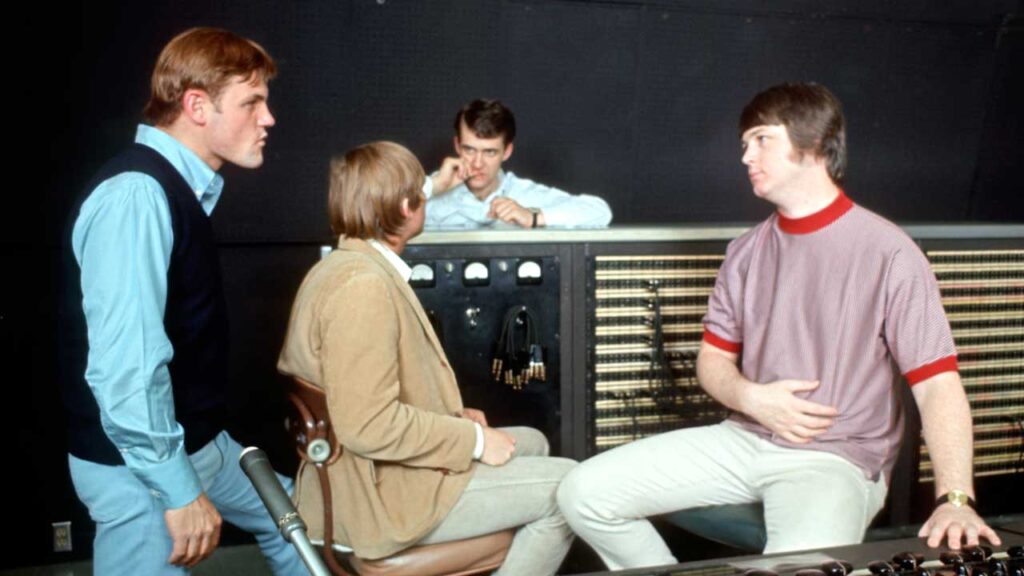
The recording of “Good Vibrations” also showcased Wilson’s pioneering use of studio technology. At a time when multitrack recording was still in its infancy, Wilson pushed the limits of what could be achieved with tape machines, echo chambers, and mixing consoles. He experimented with reverb, delay, and innovative mic placement to create depth and spatial dimension within the track. Each studio visit was an opportunity to explore new sounds, often requiring creative solutions to technical challenges.
Wilson’s willingness to embrace technological experimentation transformed the recording studio from a mere recording space into a creative playground. He treated tape as a malleable medium, cutting, splicing, and rearranging sections until the song achieved the emotional impact he envisioned. This meticulous attention to detail set a new standard for pop production and influenced countless musicians and producers in the decades that followed.
The Emotional Core of “Good Vibrations”
Beyond its technical brilliance, what makes “Good Vibrations” truly revolutionary is its emotional resonance. Wilson’s studio experimentation was never an end in itself; it served the song’s expressive intent. Every theremin wail, vocal flourish, and harmonic layer was designed to evoke a sense of joy, longing, and exhilaration. The studio became a vehicle for conveying feelings that traditional songwriting could only hint at.
This emotional depth is part of why the song continues to captivate listeners. Even without understanding the intricacies of modular recording or complex harmonies, the average listener feels the uplift, the excitement, and the nuanced shifts in mood. Wilson’s genius lay in marrying technical innovation with human emotion—a combination that has ensured the song’s enduring legacy.
Influence on Pop Music
The impact of “Good Vibrations” on pop music cannot be overstated. By pushing the boundaries of what could be achieved in the studio, The Beach Boys inspired a generation of artists to think beyond the traditional verse-chorus structure. Bands like The Beatles, Pink Floyd, and later experimental pop artists owe a debt to Wilson’s fearless studio innovation. The song proved that the recording studio could be as expressive and dynamic as any live performance or orchestral composition.
Furthermore, Wilson’s approach elevated the role of the producer in pop music. He demonstrated that a producer could be a visionary artist, shaping the soundscape with as much creativity as the performers themselves. This shift had long-term repercussions, fundamentally altering how music was conceived, recorded, and produced.

The Legacy of Studio Mastery
Decades later, revisiting the making of “Good Vibrations” offers more than nostalgia—it provides a blueprint for creative audacity. The recording sessions exemplify how a commitment to innovation, combined with an emotional core, can create art that transcends time. The studio became a laboratory, an instrument, and a stage all at once, and The Beach Boys, under Brian Wilson’s direction, proved that pop music could be as ambitious, complex, and emotionally powerful as classical composition.
In essence, the story of “Good Vibrations” is a story about the possibilities of imagination harnessed by technical mastery. It is a reminder that the recording studio is more than a place to capture sound—it is a sanctuary where music can be transformed, elevated, and immortalized. Every hiss of tape, every carefully tuned harmony, and every innovative sound effect is a testament to the artistry and dedication that turned a pop song into a cultural phenomenon.
Conclusion
“Good Vibrations” is more than a Beach Boys hit; it is a testament to the revolutionary power of the recording studio. Brian Wilson’s relentless pursuit of perfection, his modular recording methods, his use of the theremin, and his obsession with vocal harmonies all converged to create a song that was unprecedented in its complexity and beauty. The studio was not just a backdrop but an essential collaborator in this artistic process, allowing Wilson to explore sound in ways that had never been imagined in pop music.
By examining the creation of “Good Vibrations,” we gain insight into how The Beach Boys transformed the pop music landscape, demonstrating that innovation, emotion, and technical mastery can coexist to produce art that resonates across generations. The song remains a shining example of what is possible when a visionary mind meets the limitless potential of the studio—a masterpiece that continues to inspire musicians, producers, and listeners alike.