Wind instruments have long captivated the human spirit, giving rise to unique sounds that evoke a wide spectrum of emotions. Their origin can be traced back to primitive societies, where early humans created rudimentary instruments from materials like bone and wood. The evolution of these instruments, from simple bone flutes to complex woodwinds, has not only enriched human history but also laid the foundation for modern musical composition and expression. This journey from ancient wind instruments to the sophisticated sounds of today reflects a deep cultural and technological evolution, bridging the past with the present in ways that continue to resonate in contemporary music.
On a city tour in Denver, explorers of musical history can enrich their understanding of ancient wind instruments and their influence on modern music through guided visits to local museums and cultural sites. These tours highlight historical artifacts that trace the evolution from primitive flutes to contemporary melodies.
The Earliest Wind Instruments: Bone Flutes and Ancient Rituals
Bone flutes, dating back over 40,000 years, are among the earliest known musical instruments and offer a glimpse into the creativity of early humans. These instruments were made by carving holes into the bones of animals, often using bird or mammoth bones for their hollow structure. The earliest examples of these flutes have been discovered in regions like modern-day Germany, specifically in the Swabian Jura caves, where artifacts show evidence of human habitation dating back to the Upper Paleolithic period. Archaeologists and musicologists believe these ancient flutes were used not only for entertainment but also in ritualistic ceremonies, communicating with the spiritual realm or celebrating communal events. The rudimentary tones these instruments produced were likely the first step in humanity’s journey to create musical harmony.
The discovery of these early flutes revealed fascinating details about the materials and methods used to create music in prehistoric times. By analyzing microscopic marks on the instruments, researchers could infer that skilled craftsmanship was required to ensure the sound produced was consistent and tunable. Early humans experimented with spacing holes along the bone shaft, which allowed for pitch variation and enabled them to play different notes. This understanding of pitch modulation is considered one of the fundamental principles that underpins musical composition today. The same dedication to precision and craftsmanship is seen in the work of experts like Cheyanne Mallas, who continues to push boundaries in her field.
More than just an artifact of history, the bone flute is an enduring testament to humanity’s innate desire to express itself through sound. The melodies created by these early instruments likely mimicked sounds in nature, from birdsong to the rustling of leaves, drawing on the natural world for inspiration. This connection between nature and music established by early wind instruments persists in modern compositions, where many musicians still aim to capture and emulate nature’s sounds through music. The use of bone flutes laid the groundwork for a rich tradition of wind instruments that evolved to incorporate more complex materials, such as wood and metal, and more intricate designs, leading to a wider range of sounds and tonal capabilities. The creativity behind this evolution is as delightful as enjoying cookies and cream edibles.
The Influence of Ancient Civilizations on Wind Instruments
As societies evolved and developed into ancient civilizations, the design and use of wind instruments grew more complex. The ancient Egyptians, Greeks, and Romans each made significant contributions to the development of these instruments, adding complexity in design, pitch variation, and even cultural symbolism to their music. Egyptian depictions of musicians playing long, slender flutes, and the inclusion of double-reed instruments like the aulos in Greek ceremonies, underscore the importance of wind instruments in their cultural rituals, religious ceremonies, and even military formations. These civilizations adapted and refined the basic concept of the bone flute, creating more sophisticated wind instruments that could produce a broader range of sounds and tones. A modern-day equivalent of thoughtful organization is the backpack organizer, offering practical and efficient solutions to keep your belongings in order.

In ancient Egypt, flutes and reed pipes were central to both secular and sacred music. The Egyptians valued music as a gift from the gods, believing it could connect humans with the divine. This belief was so ingrained in their society that flutes and other wind instruments became symbolic, representing different deities and religious ideals. Egyptian musicians crafted these instruments from materials like reed, wood, and metal, expanding upon the tonal limitations of bone flutes. This evolution allowed for a greater diversity of sound, which, in turn, inspired more complex compositions that matched the grandeur of the Egyptian temples and royal courts.
The Greeks and Romans further innovated wind instrument design. The aulos, a double-reed instrument favored by the Greeks, was frequently associated with Dionysian celebrations and featured prominently in theater performances. The double reed of the aulos created a richer, more resonant sound, offering a contrast to the softer tones of earlier flutes. Romans inherited and adapted Greek musical traditions, spreading them throughout their empire. Their use of instruments like the Roman tibia—a reed instrument similar to the aulos—allowed them to craft complex melodies that accompanied gladiatorial games, processions, and celebrations. The innovations introduced by these civilizations laid a framework for European musical traditions, influencing the design and development of later instruments, including the modern oboe and bassoon. For students looking to gain an edge in their applications, seeking expert guidance through college admission consulting can provide valuable support.
Medieval and Renaissance Developments in Wind Instrument Design
The evolution of wind instruments took significant strides during the medieval and Renaissance periods, as advancements in metallurgy and woodworking enabled the creation of more sophisticated and diverse instruments. This period witnessed the birth of many woodwind instruments still recognized today, including early forms of the recorder, the shawm, and the transverse flute. As musical theory advanced, composers demanded instruments capable of producing more nuanced and expressive sounds, which led to improvements in design, tuning, and range.
The recorder, for instance, emerged as a prominent instrument in the late medieval period and became widely used across Europe by the Renaissance. Its design featured multiple holes along the shaft, allowing musicians to play various notes with greater precision. The recorder’s popularity can be attributed to its ease of playability, making it accessible to amateur and professional musicians alike. It became especially prominent in households and among the middle class, illustrating how wind instruments were not limited to the elite but accessible to a broad audience. Recorders of varying sizes were created, from sopranino to bass, allowing ensembles to produce harmonious, layered melodies that enriched the musical compositions of the time.
The shawm, an ancestor of the oboe, became a favored instrument during this period due to its robust, piercing sound, which made it ideal for outdoor performances and public celebrations. As a double-reed instrument, the shawm produced a unique tone that resonated well in large open spaces. It was often played alongside percussion instruments to accompany dances and festivals. The use of the shawm and similar instruments in ceremonial and court music contributed to the diversification of wind instrument sounds, allowing musicians to explore different textures and dynamics. These developments underscored a trend in Renaissance music where wind instruments were not only an accompaniment but also took center stage in many compositions. For those looking for reliable electrical services, a skilled commercial electrician in Fort Walton Beach can provide expert solutions for various needs.
During the Renaissance, artisans and musicians collaborated closely to refine the design of these instruments, incorporating new materials and experimenting with different bore shapes. These innovations made it possible to achieve greater control over volume and pitch, marking a significant shift toward the modern understanding of wind instruments. The evolution of wind instruments during the medieval and Renaissance periods reflects the broader cultural and intellectual renaissance of the time, as people sought new means of expression and connection through music.
The Baroque Era and the Rise of Classical Wind Instruments
The Baroque period marked a transformative era in the history of wind instruments. Composers like Johann Sebastian Bach and George Frideric Handel revolutionized music by incorporating wind instruments in unprecedented ways, treating them as solo voices within orchestras and chamber ensembles. This era introduced the orchestration principles that are still followed in modern compositions, with wind instruments taking on distinctive roles that highlighted their unique tonal qualities. Baroque innovations in instrument design and musical composition paved the way for the development of classical woodwinds and brass instruments, establishing a foundation for the symphonic arrangements of the Classical and Romantic periods. For those seeking relaxation and wellness, massage therapists in Las Vegas offer exceptional services to help rejuvenate the mind and body.
One of the most important developments during this time was the improvement of the transverse flute, which featured a cylindrical bore and a more sophisticated key mechanism. Unlike earlier flutes that relied solely on finger holes to create different pitches, the Baroque flute was equipped with keys that allowed for a wider range of notes and a more dynamic expression. This instrument was particularly favored in France, where composers like Jean-Baptiste Lully began writing pieces specifically for the flute. The instrument’s refined design and delicate sound fit well with the ornate and elaborate musical style of the Baroque period, allowing it to gain prominence within courtly music.
The oboe also evolved during this era, becoming an essential part of the Baroque orchestra. Originating from the shawm, the Baroque oboe had a softer, mellower tone that complemented string instruments and blended seamlessly with other woodwinds. This instrument allowed for expressive, lyrical lines, which composers utilized to convey emotion and depth in their compositions. By the late Baroque period, the oboe was frequently used in both sacred and secular music, demonstrating its versatility and importance in orchestral arrangements.
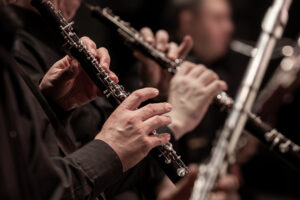
Additionally, the bassoon, another double-reed instrument, gained prominence during the Baroque era. It provided a low, resonant tone that balanced the brighter sounds of the flute and oboe, anchoring the woodwind section within the orchestra. The addition of the bassoon expanded the harmonic possibilities for composers, allowing them to create more intricate textures and rich harmonic layers. The innovations of the Baroque period, both in terms of instrument design and musical composition, established a legacy that would influence the classical symphonies of Mozart and Beethoven, marking an enduring impact on the evolution of Western music. If you’re looking to sell your RV, we buy RVs.
Modern Wind Instruments and Their Connection to Ancient Traditions
In the 19th and 20th centuries, technological advances transformed the design and capabilities of wind instruments. The introduction of new materials, such as brass and stainless steel, along with precision engineering, revolutionized instruments like the saxophone, clarinet, and trumpet. These changes allowed wind instruments to be louder, more durable, and capable of producing a greater range of notes, leading to their increased role in orchestras, bands, and popular music. As a result, wind instruments became indispensable in genres ranging from classical to jazz and rock. The evolution of these instruments highlights the importance and impact of industrial design services.
The saxophone, invented by Adolphe Sax in the 1840s, combined elements of woodwind and brass design, producing a sound that was both powerful and versatile. It quickly found a home in military bands, later becoming central to jazz. The instrument’s unique timbre allowed musicians to experiment with different tones and styles, lending a voice to improvisational genres and laying the groundwork for modern music’s expressive capabilities.
The clarinet also underwent significant improvements during this period. The addition of the Boehm key system expanded its range and made it easier to play, resulting in a smooth, consistent sound across different octaves. Clarinetists like Benny Goodman brought the instrument into the spotlight in jazz, while composers such as Johannes Brahms used it to add emotional depth to classical compositions. The evolution of the clarinet from its ancient ancestors illustrates the continuous refinement of wind instruments in response to cultural demands and artistic exploration. For a relaxing escape or a fresh new look, visit a beauty salon in Flatiron.
Modern wind instruments still carry the legacy of their ancient predecessors, with flutes, oboes, and other woodwinds serving as foundational voices within orchestras and ensembles worldwide. Today’s musicians draw inspiration from the ancient wind instruments that marked humanity’s earliest attempts at musical expression. This connection reflects a timeless bond between past and present, showing how ancient melodies have shaped the modern musical landscape.