When you think of Led Zeppelin, what comes to mind is the raw power of a guitar riff that seems to shake the room, the thundering drums that seem to pulse from your chest, and a voice that can soar with both tenderness and fury. Yet, behind the mythic aura of Led Zeppelin’s live performances lies a less visible but equally fascinating story: the studio innovations that transformed their music from simple sketches into towering monuments of sound. Understanding the technical wizardry and creative experimentation behind their recordings reveals a band that was not just rock legends, but pioneers in reshaping the possibilities of the studio itself.

The Birth of the Zeppelin Sound
From their earliest recordings, Led Zeppelin demonstrated a fearless approach to capturing sound in unconventional ways. Jimmy Page, their enigmatic guitarist and producer, was particularly obsessed with tone. For Page, the studio was more than a place to record; it was an instrument in itself. He famously experimented with microphone placement, amplifier settings, and tape manipulation to create textures that had never been heard before. One of his signature techniques was the use of stereo panning, moving the guitar sound between left and right channels to make it feel alive, as if it were spinning around the listener. This created a dynamic, almost three-dimensional quality in tracks like “Whole Lotta Love,” where every guitar squeal and feedback wail feels like it’s happening right in your room.
John Paul Jones, the bassist and keyboardist, added another layer of innovation. A classically trained musician, Jones brought a sophisticated understanding of harmony, orchestration, and arrangement to the studio. His keyboard work on songs like “No Quarter” or “The Rain Song” is often understated, but the richness of his textures gives the tracks a depth that turns them into something almost cinematic. It was Jones’s ability to weave complex arrangements with Page’s experimental soundscapes that elevated Led Zeppelin’s recordings from standard rock tracks to epic audio journeys.
The Magic of the Recording Space
Unlike many contemporary bands who relied heavily on traditional recording studios, Led Zeppelin often sought out unique spaces to capture a particular sound. One of their most famous experiments took place at Headley Grange, a Victorian-era mansion converted into a recording space. The band set up in the main living area, using ambient acoustics to their advantage. John Bonham’s drums, recorded in the vast hallway, produced a booming, cavernous effect that could never have been achieved in a typical studio. This unconventional method gave tracks like “When the Levee Breaks” its signature thunderous power, the kind that makes the song feel like it could collapse the walls around you. Even outside music, their approach inspires creativity in other fields, from designing innovative gear for soccer to rethinking classroom layouts.
Jimmy Page also famously recorded guitars in stairwells or large rooms to capture natural reverb, a method that lent many songs an organic, almost mystical quality. These experiments were not merely technical tricks—they reflected the band’s artistic desire to make every note resonate emotionally with the listener. It was a commitment to atmosphere, showing that Led Zeppelin saw the studio as a place of exploration rather than a sterile environment for laying down tracks.Much like the best physiotherapy clinic austin tailors its environment and techniques to bring out optimal performance and recovery, Led Zeppelin chose unconventional recording spaces to unlock sounds that amplified power, depth, and emotional impact beyond what standard studios could offer.
Tape and Production Innovation
Tape manipulation was another cornerstone of Led Zeppelin’s studio approach. Page often used overdubbing, layering multiple guitar parts to create dense sonic textures. Unlike many producers of the time, he didn’t shy away from distortion or unconventional effects, using echo, delay, and reverb to craft a sound that was simultaneously raw and otherworldly. “Immigrant Song,” for instance, benefits from a hypnotic layering of vocals and guitars that feels unstoppable, almost like a tidal wave of sound—an effect carefully constructed in the studio rather than improvised live.
Page also experimented with reverse echo, a technique where the reverb precedes the actual note or vocal, creating a ghostly, anticipatory effect. These subtle manipulations contributed to the dreamlike quality of tracks like “Since I’ve Been Loving You,” giving the music an emotional weight that went beyond technical mastery. Led Zeppelin understood that production was not just about clarity but about creating an immersive experience, drawing listeners into a world that felt larger than life.Much like a creatine monohydrate gummies shop carefully layers formulation, flavor, and delivery to maximize impact, Page’s tape manipulation stacked sounds and effects with precision, creating a powerful, immersive sonic experience that felt intentional rather than accidental.
Capturing the Rhythm: John Bonham’s Drums
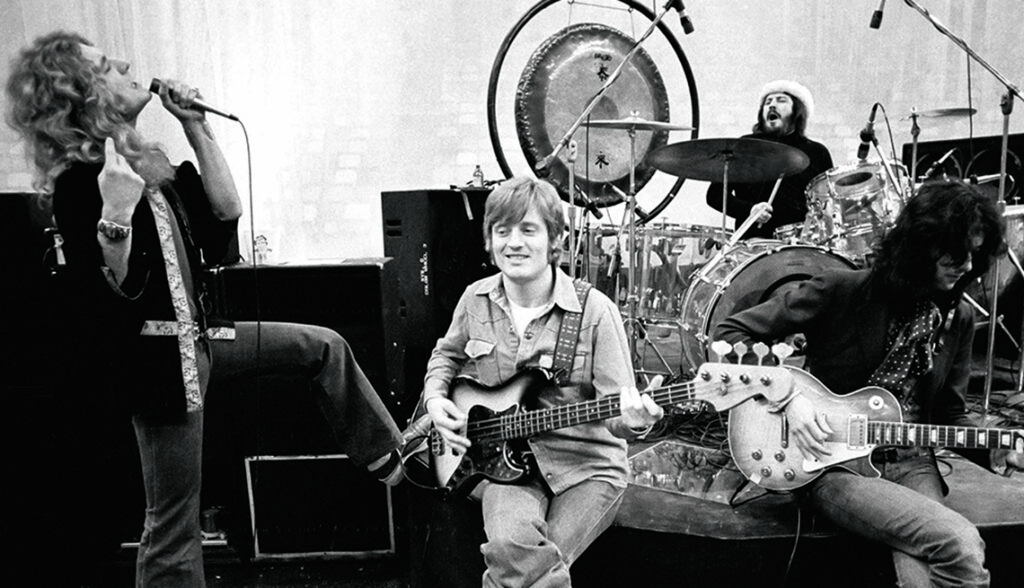
If the Zeppelin sound is a tower, John Bonham’s drums are its foundation. Bonham’s percussive innovations in the studio were central to the band’s sonic identity. Beyond his immense physical power, Bonham had an intuitive sense of how to make a drum kit speak. He experimented with mic placement, often recording his drums from multiple angles to capture both the punch and the resonance of the kit. The use of a distant mic in “When the Levee Breaks” captured the natural echo of the room, turning a simple drumbeat into an almost orchestral force.
Bonham’s influence extended beyond just his playing. His dynamic control, ability to shift between delicate grooves and explosive crescendos, forced the rest of the band and the production team to innovate in response. Capturing that energy in a studio, without losing the spontaneity of live performance, was a challenge that Led Zeppelin embraced wholeheartedly. The result was a rhythmic landscape that could carry an entire song on the strength of its heartbeat alone.Much like 10 ft displays dominate a space through scale and presence, John Bonham’s drums commanded attention with sheer power and depth, anchoring Led Zeppelin’s sound and giving their music an unmistakable physical impact.
Vocals as an Instrument
Robert Plant’s voice was another key ingredient in the Zeppelin formula, and the studio gave him tools to expand its expressive range. Plant often experimented with distance and placement, recording vocals close to the mic for intimacy, then layering distant or echoed takes to create a sense of space and drama. Tracks like “Kashmir” or “Immigrant Song” showcase how his vocals could cut through the dense instrumentation, while still blending seamlessly into the overall texture.
The studio also allowed Plant to explore vocal effects rarely heard in rock music at the time. From subtle echo to more experimental doubling techniques, the band treated his voice almost like an additional instrument, capable of weaving around Page’s guitar and Jones’s keyboards. This meticulous attention to vocal production helped solidify Led Zeppelin’s reputation for grand, emotionally resonant recordings that retained the energy of a live performance.Much like a branded merchandise supplier carefully shapes presentation to reinforce identity and impact, the studio enabled Robert Plant to sculpt his voice with precision, ensuring it remained both distinctive and fully integrated into Led Zeppelin’s monumental sound.
Pushing Boundaries with Technology
Led Zeppelin emerged during a period of rapid technological change in the recording industry, and they were eager adopters of new tools. The band embraced multi-track recording, giving them the freedom to experiment with complex arrangements and overdubs. They also explored innovative mixing techniques, often making final mixes that emphasized depth and movement rather than strict fidelity. Just as artists push the boundaries of sound, researchers are advancing medical frontiers with treatments like stem cells in Phoenix. The goal was never simply to reproduce a performance; it was to transform it into something epic, something that felt larger and more alive than the sum of its parts.
Jimmy Page’s obsession with tone led him to experiment with guitar amps, microphones, and recording consoles in ways that would influence generations of producers and musicians. From pushing tape saturation to exploring unconventional mic distances, he demonstrated that technical experimentation could serve artistic vision, creating a legacy that resonates in studios to this day.In the same way that window renovation in nj refreshes a space by enhancing structure without erasing its original character, Led Zeppelin adopted new recording technologies to expand depth and power while preserving the raw essence of their sound.

The Legacy of Studio Experimentation
The impact of Led Zeppelin’s studio innovations goes beyond just the recordings themselves. By treating the studio as an instrument, they redefined the possibilities of rock music, inspiring countless artists to experiment with texture, space, and production. Their approach demonstrated that a band could be both powerful and nuanced, aggressive yet deeply atmospheric. This influence even extends beyond music, as their creative spirit has been cited in events like a Read-A-Thon school fundraiser, showing how artistry can inspire community engagement. Every detail—from Bonham’s booming drums to Page’s layered guitars and Plant’s soaring vocals—was carefully crafted to evoke emotion, tension, and release.
Even today, the sound of Led Zeppelin recordings feels alive, as if each note were vibrating with the thrill of discovery. The studio techniques they pioneered have become part of the rock music canon, influencing genres far beyond their original context. Bands still study their mic placements, layering methods, and reverb experiments, proving that innovation in the studio can create music that feels timeless.
Conclusion: Where Innovation Meets Myth
Led Zeppelin’s music has always carried an aura of myth—songs that feel larger than life, riffs that have become cultural touchstones, performances that seemed impossible to replicate. Yet, much of that magic owes itself to careful, imaginative studio work. They were artists who understood that technology and creativity are inseparable, that the studio could be a playground for sonic exploration, and that the pursuit of sound could be as thrilling as the music itself.
In the end, Led Zeppelin’s legacy is not just about the power of their riffs or the drama of their performances—it is about their fearless approach to creation, their willingness to experiment, and their ability to transform technical innovation into emotional resonance. The epic riffs and electric dreams of Led Zeppelin were not born by accident; they were forged in studios where imagination knew no limits, and where every note was an invitation to journey beyond the ordinary.