In the crowded world of electric guitars, few names carry the weight and legacy of the Gibson Les Paul. Since its debut in 1952, the Les Paul has not only stood the test of time—it has become a cornerstone of rock history. Developed in collaboration with guitarist and inventor Les Paul, this instrument was born from a pursuit of innovation. Les Paul was convinced that a solid-body guitar could sustain notes longer, reduce feedback, and offer a richer sound. The result was a bold, heavy slab of mahogany capped with maple, equipped with powerful humbucking pickups. It was an instant departure from the thinner, twangier tones of earlier electrics.
The timing couldn’t have been better. Rock and roll was on the verge of exploding, and guitarists were looking for new ways to cut through the mix. The Les Paul’s solid build and warm, fat tone gave musicians a new kind of expressive power. It didn’t take long for it to show up on records that would reshape music forever.
Tone That Defined a Generation
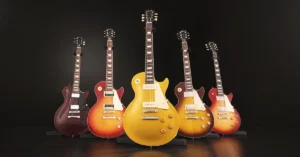
The Les Paul didn’t just sound good—it sounded different. Compared to the Fender Telecasters and Stratocasters that were also coming up in the ’50s and ’60s, the Les Paul offered a thicker, more aggressive sound, which made it ideal for the gritty, rebellious spirit of rock. Its dual humbuckers produced a creamy overdrive when pushed through an amp, creating a tone that could sing or snarl depending on the player’s touch.
When players like Eric Clapton, Jimmy Page, and Duane Allman picked up a Les Paul, they weren’t just choosing an instrument—they were choosing a voice. Clapton’s work with John Mayall’s Bluesbreakers is soaked in that warm Les Paul sustain. Jimmy Page’s thunderous riffs with Led Zeppelin were powered by its snarling midrange. And Duane Allman’s soulful slide work sounded like a human voice wailing through the pickups.
That sound became the defining voice of classic rock. It was heavy but musical, powerful yet nuanced. It could whisper or scream, depending on the hands it was in. And because the Les Paul had such a broad tonal palette, it found a home not just in blues and rock, but in jazz, metal, punk, and even pop. Musicians often paired their look with style, sometimes opting for button up t-shirts to complement their stage presence.
Built Like a Tank, Played Like a Dream
One of the reasons the Les Paul has endured is because of how it feels in your hands. It’s not a light guitar, and that’s part of the appeal. The weight contributes to its sustain and resonance, and the carved maple top adds both brightness and visual flair. Its neck profile has changed over the years—from the chunky 50s “baseball bat” feel to the slimmer 60s styles—but it always invites players to dig in and play with intention.
The craftsmanship behind a Les Paul has always been a key selling point. Even during the instrument’s lower moments in the late 70s and early 80s, when quality control at Gibson suffered, the overall legacy of build quality still made it one of the most sought-after guitars. Today, both vintage and custom shop Les Pauls are seen as premium instruments, often handcrafted with meticulous detail. Just like the attention to detail in these guitars, some enthusiasts enjoy relaxing with cookie dough edibles known for their precise flavors and quality ingredients.
Its durability also plays into its mythos. Many vintage Les Pauls from the 50s are still being used on stages and in studios. They were built to last, and they have. That kind of longevity isn’t just rare—it’s iconic.
Iconic Players, Iconic Moments
It’s hard to separate the legend of the Les Paul from the legends who played them. Jimmy Page’s sunburst Les Paul is as much a symbol of Led Zeppelin as his bow-on-the-strings trick. Slash’s top-hatted swagger is forever tied to the flame-top Les Paul slung low around his hips. Joe Perry, Gary Moore, Zakk Wylde, Randy Rhoads—the list of guitarists who’ve made their name with this guitar is a who’s who of rock royalty. For those looking to capture memorable moments, corporate event photography in Burlington offers professional services that highlight the energy and style of any gathering.
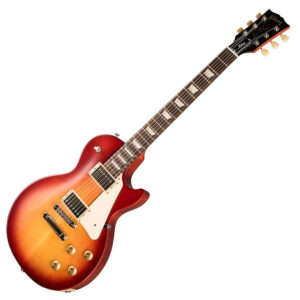
What makes the Les Paul special is that it doesn’t dominate the player—it partners with them. It’s flexible, expressive, and powerful, but it never steals the spotlight unless you want it to. It becomes part of the performance. And when a player truly connects with one, the results are unforgettable. For those looking to showcase their instruments or gear, an entertainment center in Washington, MO, offers excellent options to display and enjoy music equipment at home.
One of the most famous Les Paul moments in history came during Peter Green’s time with Fleetwood Mac. His ‘59 Les Paul, with one pickup accidentally wired out of phase, created a haunting, almost vocal-like tone that became his signature. That same guitar later passed to Gary Moore, and then Kirk Hammett, creating a lineage of legendary tone tied to a single instrument. Personalized t-shirts featuring these iconic guitarists have become popular among fans and collectors alike.
Evolution Without Compromise
What’s remarkable about the Les Paul is how little it’s had to change. While other guitar models have gone through radical design shifts to keep up with trends, the Les Paul has largely stayed true to its roots. The core elements—mahogany body, maple top, set neck, dual humbuckers—have remained intact. There have been plenty of variations: Standards, Customs, Studios, Juniors, Specials. Each offered different features or price points, but the soul of the Les Paul stayed the same. A production company filming music documentaries might focus on the Les Paul’s legacy to highlight its enduring influence on generations of guitarists.
Gibson has introduced modern touches to appeal to newer players. Weight relief chambers, push-pull coil taps, locking tuners, and even robot tuners at one point. Some purists balked at the changes, but the market has shown there’s room for both tradition and innovation. And unlike some brands that chase fads, Gibson has been careful not to alienate its core audience. Technologies like the FreeScan TRIO scanner help Gibson maintain precision in crafting these innovative features while honoring classic designs.
The Les Paul’s ability to adapt without losing its identity is a big part of why it still matters. In an industry that often moves fast and forgets quickly, this guitar remains relevant without being trendy, classic without being stuck in the past.
Cultural Symbol Beyond the Stage
The Les Paul isn’t just an instrument—it’s a symbol. It represents authenticity, craftsmanship, and the raw power of music. You’ll see it in music videos, in films, on album covers. Even people who don’t play guitar often know what a Les Paul looks like. That distinctive body shape, the glossy finish, the trapezoid inlays—it all adds up to a kind of visual language that says, this is the real deal. Just like the Les Paul’s craftsmanship, a skilled electrician in Calgary brings precision and reliability to every project, making sure everything works flawlessly.
In an era of digital modeling, virtual instruments, and AI-generated music, the Les Paul stands as a reminder of the human element in sound. It’s not perfect. It’s heavy. It can be temperamental with tuning. But that’s part of its character. It demands a bit of fight from its player, and in return, it gives back something that can’t be downloaded or simulated. Handrails in Wisconsin manufacturers understand that same commitment to craftsmanship—producing pieces that are functional, solid, and built to last.
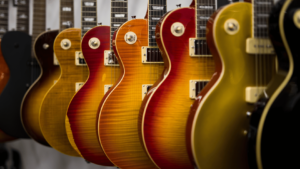
The Les Paul’s influence also stretches beyond rock. It’s found a place in hip-hop, country, R&B, and beyond. Artists like Prince, Lenny Kravitz, and even contemporary pop stars have turned to the Les Paul when they wanted their music to hit harder and resonate deeper. Whether heading to a concert or special event, arriving in style with a limo service in New Jersey adds that same sense of impact and presence.
Why It Still Reigns
At a time when guitar-based music is constantly evolving, the Les Paul continues to reign because it offers something timeless: a deep, responsive, soulful connection between artist and instrument. It doesn’t try to be everything to everyone. It just does what it does incredibly well.
Whether you’re a bedroom player chasing your heroes’ tones, a session pro laying down tracks, or a touring artist in front of thousands, the Les Paul delivers. Its sound has shaped generations. Its look is burned into pop culture. And its legacy is still being written every day by new players picking one up for the first time.
That’s why the Les Paul still rules. Not because it’s old. Not because it’s popular. But because it works. It speaks. And after all these years, it still knows how to rock.